Research
Mechanistic and AI-Assisted Modeling for Toxicology and Therapeutic Delivery
Our research asks how environmental exposure and engineered delivery become biologically effective internal dose. We combine mechanistic modeling, experimental evidence, artificial intelligence and machine learning, and quantitative in vitro–in vivo extrapolation to connect exposure or delivery with target-tissue dose, biological interactions, and health-relevant outcomes.
Research Area 01
Mechanistic Biological Modeling for Next-Generation Risk Assessment
How can external environmental exposure be translated into human-relevant internal and target-tissue dose?
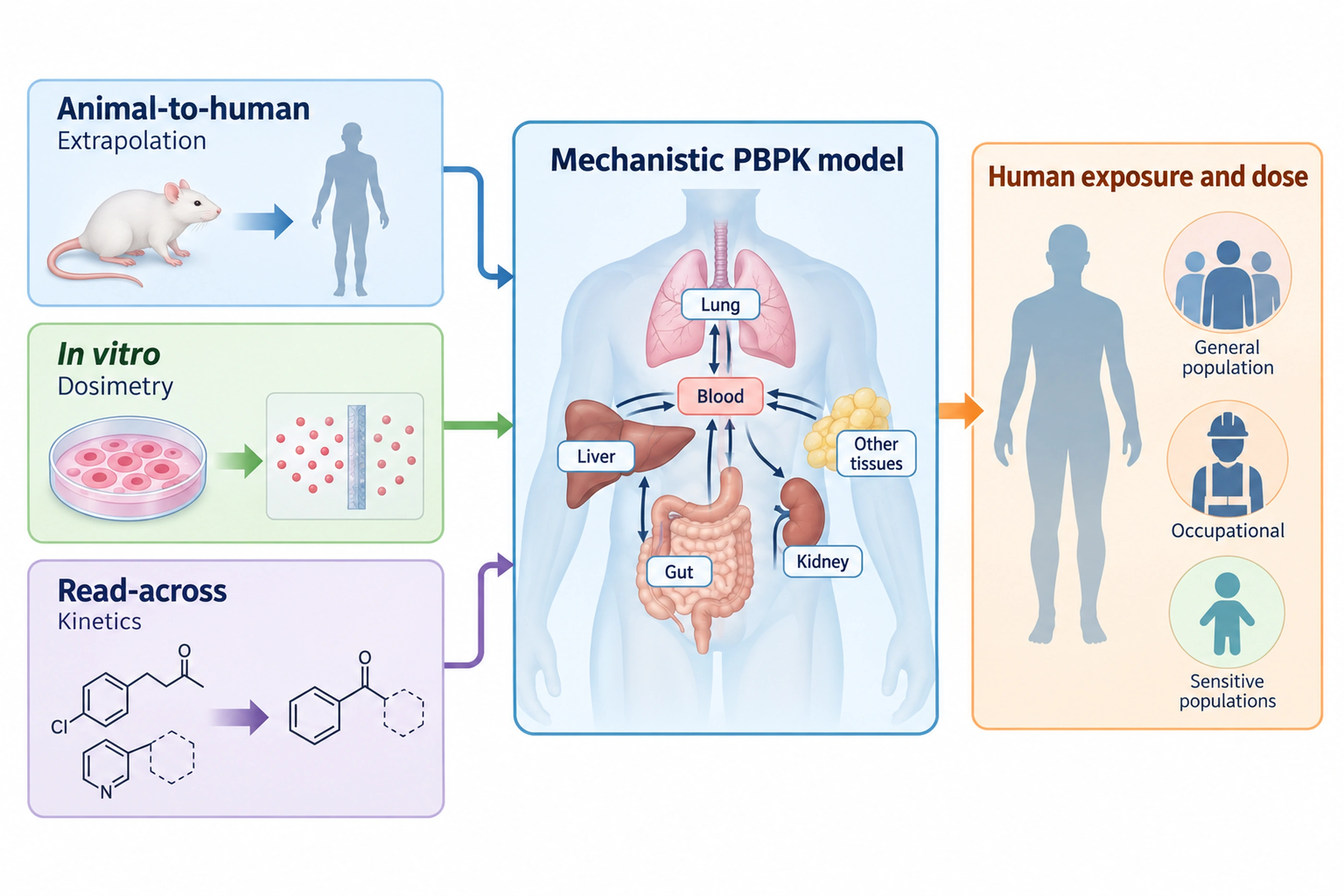
Our work develops mechanistic biological models that connect external exposure with internal and target-tissue dose. PBPK/PBTK models integrate physiology, route-specific uptake, tissue distribution, elimination, and population variability to support species extrapolation and human-relevant risk assessment.
We apply this framework to environmental contaminants including PFAS and micro/nanoplastics and integrate mechanistic modeling with IVIVE/QIVIVE, biomonitoring, Bayesian uncertainty analysis, and reverse dosimetry. The goal is to determine which exposure levels in humans correspond to experimentally observed biological effects and to improve risk assessment when direct human toxicokinetic data are limited.
Research Area 02
AI-Enabled Predictive Toxicology
How can we make reliable toxicokinetic and toxicity predictions when chemical-specific data are sparse or complex?
We integrate machine learning with mechanistic and experimental evidence to predict toxicokinetics, toxicity, and chemical behavior when conventional data are limited. Rather than treating AI as a replacement for biological knowledge, we use interpretable and testable models to identify relationships that can inform mechanistic modeling, chemical prioritization, and experimental design.
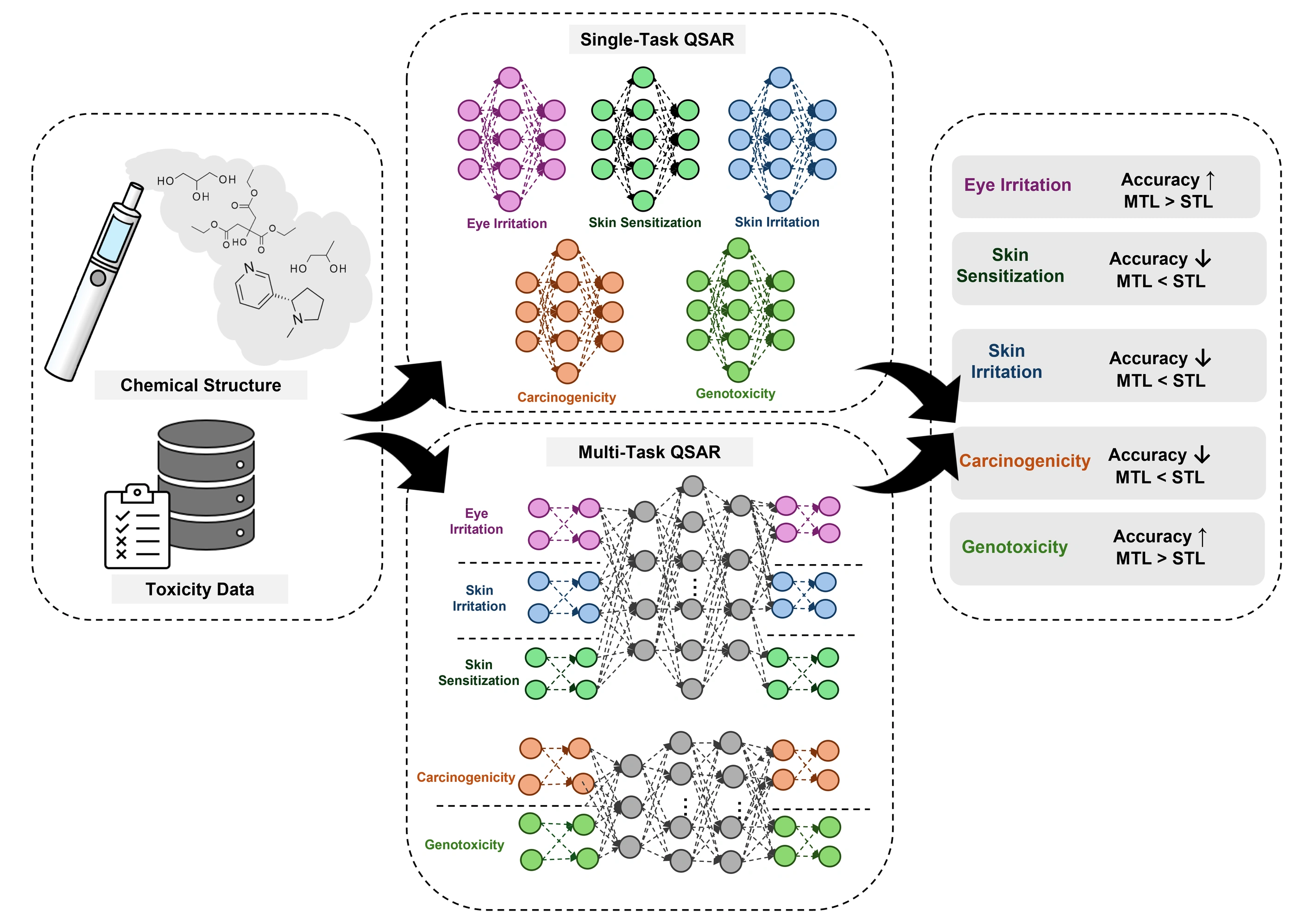
Current applications include PBPK read-across, chemical similarity, multi-task QSAR, and machine-learning-assisted non-target analysis. Our e-cigarette research provides one example: predictive models help prioritize chemicals and transformation products, while measured aerosol concentrations and inhalation dosimetry can ultimately move the analysis from hazard prediction toward dose-informed risk assessment.
Research Area 03
Nano-Bio Interactions & Nanomedicine
Which nano-bio interactions determine nanoparticle biological identity, disposition, and therapeutic delivery?
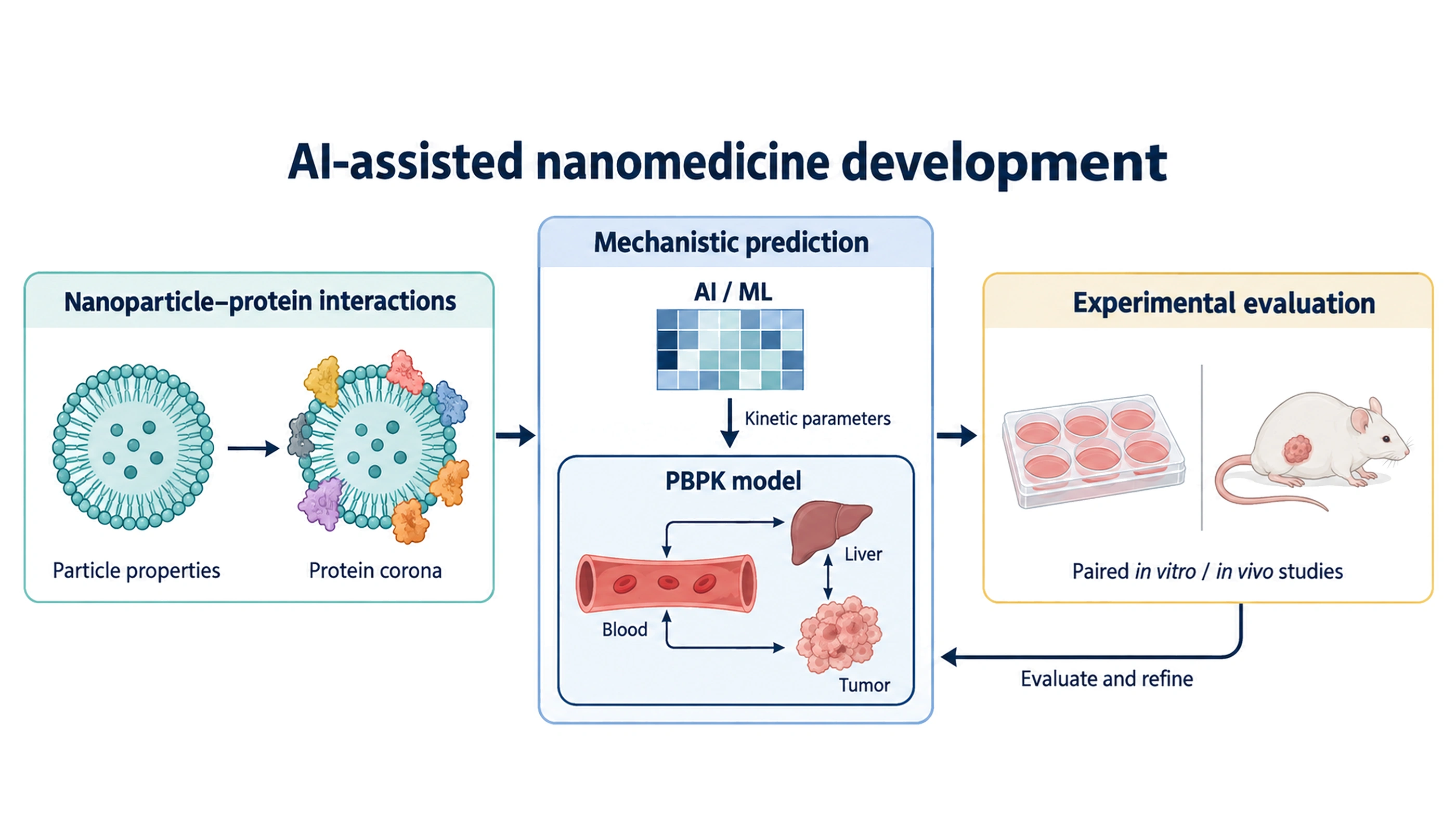
Nanoparticles acquire a biological identity after entering biological fluids, and that identity can alter cellular recognition, uptake, clearance, tissue distribution, and off-target exposure. Our laboratory studies these nano-bio interactions, with particular emphasis on the protein corona and its relationship to nanoparticle fate.
We combine curated experimental data, interpretable machine learning, cellular measurements, and PBPK modeling to determine when biological interaction measurements improve predictions beyond engineered formulation properties alone. This framework is being extended to lipid nanoparticles and tumor delivery, where in vitro kinetic phenotypes and nano-bio measurements can be evaluated as mechanistically meaningful information for PBPK–IVIVE and prospective formulation testing.
Research Area 04
Biomaterials & Regional Drug Delivery
How do material properties, release kinetics, and administration strategies shape regional exposure and biological response?
This research direction examines how biomaterial properties, release kinetics, and administration procedures influence target-tissue exposure and biological response. Our contribution is to make the relationship between material or device design choices and biological outcomes quantitatively explicit and experimentally testable.
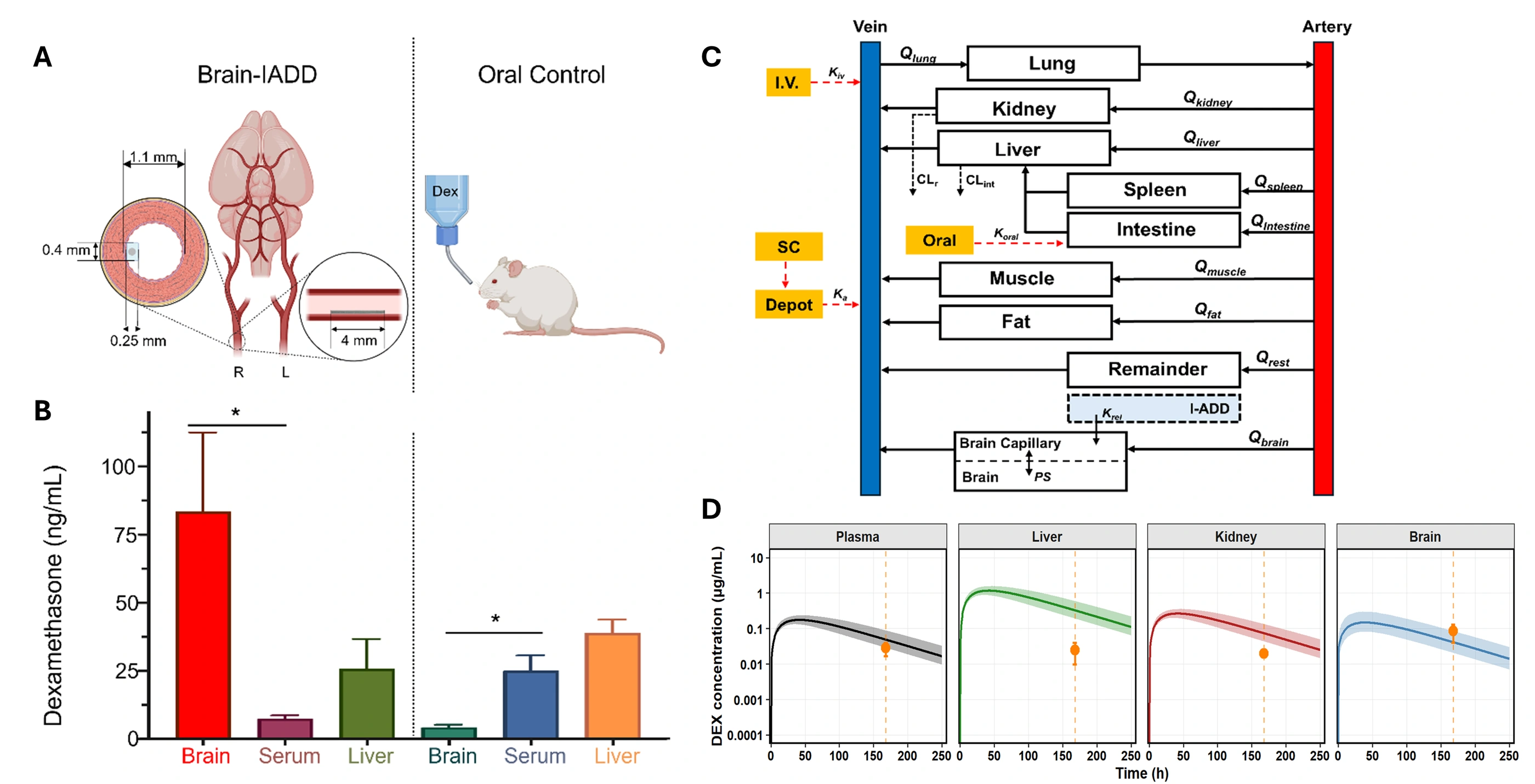
Current collaborative programs include AI-guided biomaterial design and regional drug-delivery modeling. In biomaterials, active-learning approaches can prioritize informative formulations by integrating material characterization with biological measurements. In regional delivery, PBPK models connect device release, regional input, whole-body disposition, and target-versus-peripheral exposure. Related work extends these concepts to brain-targeted delivery and biological barriers such as the blood-brain barrier.